As a parent, you probably celebrate every milestone in your child’s dental journey, the first tiny tooth, the cute toothless smile, and even the excitement of wiggly teeth falling out. But what happens when a baby tooth falls out too early?
Most parents think:
“It’s okay… it’s just a milk tooth anyway.”
But sometimes, losing a baby tooth too soon can create bigger problems later.
At Tiny Teeth Dental Clinic, one of the most common questions parents ask is:
“Does my child really need dental help?”
The answer depends on your child’s age, the missing tooth, and how the permanent teeth are developing. In many cases, Space maintainers for kids help protect the space needed for healthy future teeth.
Without proper care, premature tooth loss in children may lead to shifting teeth, crowding, and future orthodontic issues.
This blog will help you understand what Space maintainers are, why dentists recommend them, the different types available, and how they help protect your child’s future smile.
What Is a Tooth Space Maintainer for a Child?
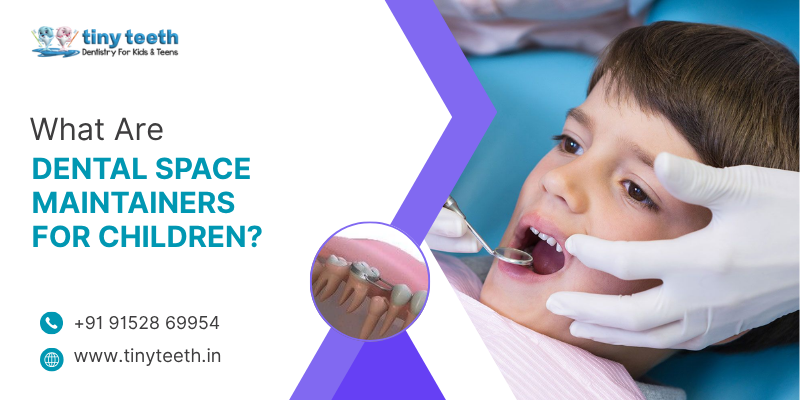
A tooth space maintainer is a small dental appliance that keeps the empty space open after a baby tooth falls out too early.
Normally, baby teeth act like placeholders for adult teeth. They guide the eruption of permanent teeth into the correct position.
But when a baby tooth is lost early creates an empty space too soon, and nearby teeth may start drifting into that area.
This can affect:
- Tooth alignment
- Dental arch development
- Future spacing
- Jaw growth
That’s why dentists often recommend space maintainers for kids after early tooth loss.
Space maintainers are carefully designed according to your child’s age and tooth development.
How Do You Know If Your Child Needs a Space Maintainer?
Not every missing baby tooth requires treatment. However, your child may need space maintainers if:
- A baby tooth was removed early due to decay
- A tooth was lost because of an injury
- Adult teeth are still far from erupting
- Teeth nearby are already shifting
At Tiny Teeth Dental Clinic, dentists evaluate:
- Your child’s age
- Tooth position
- Jaw development in kids
- Dental X-rays
- Future eruption pattern
This helps determine whether a space maintainer is necessary.
Types of Space Maintainers For Kids
There are several types of space maintainers for kids, depending on the location of the missing tooth and your child’s dental condition.
Band and Loop Space Maintainer
One of the most common options is this maintainer.
This appliance usually includes:
- A metal band attached to a nearby tooth
- A small loop that holds the empty space open
The Band and loop space maintainer is often recommended when one baby molar is lost early.
At Tiny Teeth Dental Clinic, this appliance is commonly used because it is simple, effective, and comfortable for many children.
Crown and Loop Space Maintainer
A crown and loop maintainer is similar to the band-and-loop type, but instead of a metal band, a dental crown supports the appliance.
This option may be recommended when the supporting tooth is already damaged or restored.
A crown and loop space maintainer provides better strength in certain situations and helps maintain proper spacing for future teeth.
Fixed Space Maintainer for Children
Some children need appliances that stay permanently attached until removed by the dentist.
A fixed space maintainer appliance remains securely in place and does not rely on the child remembering to wear it.
These appliances are especially useful for younger children who may lose removable appliances easily.
Fixed space maintainer options are commonly recommended for long-term reliability.
Removable Space Maintainer for Kids
Older children may sometimes use a removable space maintainer appliance.
This type can be taken out during cleaning or eating, depending on the dentist’s instructions.
A removable space maintainer option may work well for responsible children who can consistently follow proper care instructions.
Unilateral Space Maintainer
When only one side of the mouth requires space maintenance, a unilateral space maintainer may be used.
This appliance helps maintain the gap on one side without affecting the entire dental arch.
The maintainer is often chosen for localized tooth loss situations.
Lingual Arch Space Maintainer
When multiple teeth are missing in the lower jaw, dentists may recommend a lingual arch space maintainer.
This appliance uses a wire running behind the lower front teeth to help preserve spacing.
A lingual arch space maintainer is especially useful when several lower teeth are lost early.
Dentists recommend the appliance carefully based on your child’s overall dental arch development.
What Is the Most Commonly Used Space Maintainer?
The band and loop space maintainer is generally considered the most commonly used option for children.
It is especially effective for maintaining space after the loss of a single baby molar.
Dentists often prefer it because:
- It is simple
- Comfortable
- Durable
- Easy to monitor
At Tiny Teeth Dental Clinic, this appliance is frequently used for younger children with isolated tooth loss.
What Happens If You Ignore Early Tooth Loss?
Some parents wait too long after a baby tooth is lost early, assuming adult teeth will eventually “figure it out.”
Unfortunately, nearby teeth may begin shifting within months.
This can lead to:
- Crowding of permanent teeth
- Misaligned bites
- Orthodontic problems in children
- Future braces treatment
Space maintainers for kids help prevent unnecessary tooth movement during critical growth stages.
How Space Maintainers Help Jaw Development?
Healthy spacing affects more than just tooth alignment.
Proper spacing also supports:
- Dental arch development
- Jaw development in kids
- Balanced chewing
- Better eruption guidance
Preserving healthy jaw structure is considered an important reason for recommending space maintainers for kids.
Are Space Maintainers Painful?
This is one of the most common concerns parents have. Most children adjust to space maintainers quickly.
Initially, your child may feel:
- Mild pressure
- Slight awareness while speaking
- Minor adjustment discomfort
But these sensations usually improve within a few days.
At Tiny Teeth Dental Clinic, appliances are customized carefully to improve comfort and fit.
How Long Does a Child Need a Space Maintainer?
The appliance usually remains in place until the permanent tooth is ready to erupt.
The exact duration depends on:
- Your child’s age
- Which tooth is missing
- Eruption of permanent teeth
- Jaw growth progress
Caring for a Space Maintainer
Good oral hygiene is extremely important during treatment. Parents should encourage children to:
- Brush carefully around the appliance
- Avoid sticky candies
- Avoid chewing hard foods
- Attend regular dental checkups
At our dental clinic, parents receive complete care instructions after placement.
Can Space Maintainers Prevent Braces?
Not always, but they can reduce the chances of severe orthodontic problems in children later.
Space maintainers for kids help guide teeth into healthier positions by preventing unnecessary shifting.
This may reduce:
- Tooth spacing issues
- Severe crowding
- Complex orthodontic treatment needs
Early preventive care is strongly encouraged because small interventions often prevent bigger dental problems later.
Why Timing Matters?
The earlier the shifting begins, the harder the correction may become later.
That’s why dentists usually recommend evaluation soon after premature tooth loss in children.
Waiting too long can allow surrounding teeth to move into the empty space permanently.
Space Maintainers Are About Prevention
Parents sometimes feel worried when their child needs a dental appliance.
But remember, space maintainers are preventive tools.
The goal is to protect your child’s future smile before bigger problems develop.
Many parents later feel relieved when they chose early treatment because it helped preserve healthier spacing and alignment.
When Should You Visit The Dentist?
You should schedule a dental visit if:
- Your child loses a baby tooth unusually early
- A tooth is extracted because of decay
- Teeth appear crowded
- Permanent teeth seem delayed
- Your child experiences uneven spacing
Early evaluation allows dentists to determine whether space maintainers for kids are necessary.
Conclusion
Baby teeth may be temporary, but they play a very important role in your child’s long-term dental health.
When a baby tooth is lost early creates an empty space too soon, and nearby teeth may shift and affect future alignment.
That’s why kids space maintainers are often recommended to preserve healthy spacing, support proper eruption of permanent teeth, and reduce future orthodontic complications.
From band and loop space maintainer options to Lingual arch space maintainer appliances, different treatments are available depending on your child’s dental needs.
At Tiny Teeth Dental Clinic, every child receives personalized guidance designed to protect healthy smiles during important growth years.
If your child has lost a tooth earlier than expected, early dental evaluation can help prevent bigger problems later and support healthier smile development for the future.
FAQs
1. At what age do children usually need space maintainers?
Children may need space maintainers if a baby tooth falls out too early, before the permanent tooth is ready to erupt.
2. Can a child eat normally with a space maintainer?
Yes, most children can eat normally after a short adjustment period, although sticky and hard foods should usually be avoided.
3. How long does a space maintainer stay in the mouth?
The appliance usually stays until the permanent tooth begins erupting into the correct position.
4. Are space maintainers visible while talking?
Some appliances are slightly visible, but most children adjust quickly and continue speaking normally after a few days.
5. Do all children who lose baby teeth early need a space maintainer?
No, the need depends on the child’s age, tooth position, and how the permanent teeth are developing. A dentist can determine whether treatment is necessary.