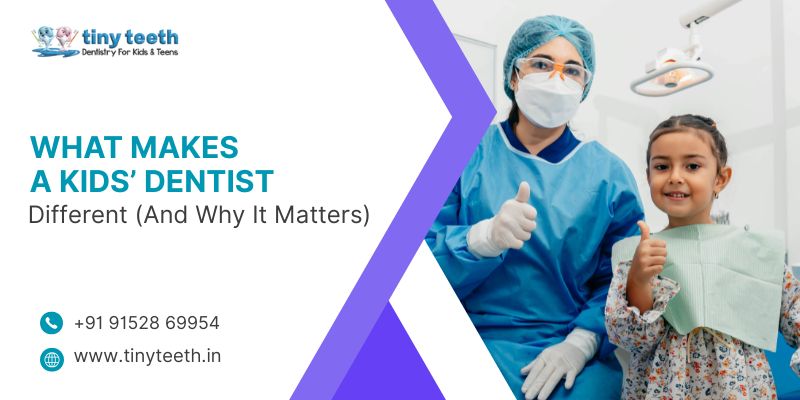
If you’ve ever tried convincing a child to sit still in a dental chair, you already know it’s not as easy as booking an appointment and walking in. Kids have their own set of needs, fears, and curiosities, and that’s exactly why pediatric dentistry exists. Just as you would take your child to a pediatrician instead of a general doctor, choosing a specialized dental doctor for kids in Chembur can make all the difference to your child’s oral health and comfort.
At Tiny Teeth, located conveniently in Tilak Nagar, Mumbai, our approach combines advanced dental care with an understanding of child psychology, growth patterns, and comfort techniques. We believe that children’s dental visits should feel positive, encouraging, and free from the anxiety that often accompanies medical appointments.
How a Kids’ Dentist Differs from a General Dentist
While both general and pediatric dentists are fully qualified to treat teeth, pediatric dentists undergo additional training focused on children’s oral health, starting from infancy through adolescence. This training includes:
- Child-specific dental anatomy and growth patterns
- Behavioural guidance and communication techniques for children of different ages
- Specialized equipment scaled for smaller mouths
- Expertise in early preventive care to set the foundation for lifelong oral health
It’s not just about treating cavities, it’s about creating a positive relationship with dental care that can last into adulthood.
The Role of Child Psychology in Pediatric Dentistry
Children are not miniature adults; their emotional responses, fears, and cooperation levels vary greatly. A skilled pediatric dentist understands these differences and adapts communication styles accordingly. At Tiny Teeth, our team uses techniques such as:
- Tell-Show-Do: Explaining each step in simple language, showing the tool, then proceeding.
- Positive reinforcement: Rewarding cooperation with words of praise or small tokens.
- Gentle distraction: Using stories, toys, or visuals to shift focus away from the procedure.
The aim is to ensure that children don’t develop dental anxiety, a common reason why adults avoid regular check-ups.
Why Early Dental Visits Matter
The ideal time for a child’s first dental visit is by their first birthday or within six months of the first tooth appearing. Early visits help:
- Identify potential issues like enamel defects or early decay.
- Educate parents on correct brushing and diet habits.
- Prevent fear of dental settings through early exposure.
For families in Chembur and Tilak Nagar, early visits to a dental doctor for kids in Chembur are an investment in your child’s overall well-being.
Common Dental Concerns in Children
In our clinic, some of the most common issues we see include:
| Dental Concern | Common Causes | Early Intervention Benefit |
|---|---|---|
| Tooth decay (cavities) | Sugary foods, improper brushing | Prevents pain & tooth loss |
| Malocclusion (misaligned bite) | Genetics, thumb sucking | Easier correction if caught early |
| Early tooth loss | Decay, injury | Maintains space for permanent teeth |
| Gum problems | Poor oral hygiene, mouth breathing | Supports overall oral health |
| Dental trauma | Falls, sports injuries | Preserves tooth function and appearance |
How Local Lifestyle in Chembur Affects Kids’ Dental Health
Chembur’s food culture, from buttery pav bhaji stalls to weekend ice creams along Diamond Garden, is a delight, but frequent indulgence in sugary treats can increase the risk of cavities in children. The humid Mumbai weather can also lead to more frequent thirst, and if kids are sipping sweetened drinks rather than water, the sugar exposure is constant.
At Tiny Teeth, we work with families to adapt oral care routines to local lifestyle habits, suggesting practical dietary tweaks and demonstrating kid-friendly brushing techniques that can be easily followed at home.
Pain-Free and Anxiety-Free Dentistry for Children
One of the biggest advantages of visiting a pediatric dentist is the emphasis on comfort. Our clinic uses child-friendly anesthesia techniques, when needed, and for especially anxious children, sedation or general anesthesia can be considered, always under strict safety protocols.
We’ve designed our clinic environment to be welcoming, with bright colors, engaging décor, and waiting room activities that help kids feel at ease before they even step into the treatment area.
Preventive Care – A Lifelong Gift
Preventive care is at the heart of pediatric dentistry. This includes:
- Fluoride treatments to strengthen enamel.
- Sealants to protect deep grooves in molars from decay.
- Regular cleanings to remove plaque and tartar.
- Growth monitoring to track jaw and teeth development.
These measures don’t just prevent cavities; they also teach children the value of taking care of their teeth from an early age.
Parent Involvement – A Crucial Part of the Process
At Tiny Teeth, we believe parents are partners in care. We guide them on:
- Choosing the right toothbrush and toothpaste for their child’s age.
- Establishing a twice-daily brushing routine.
- Making healthier snack choices without eliminating treats entirely.
- Spotting early signs of problems, like white spots on teeth or sensitivity to hot/cold.
When parents are involved and informed, children are more likely to follow through with good habits.
Special Considerations for Children with Special Needs
A pediatric dentist is also trained to work with children who have developmental, behavioral, or medical conditions. This might mean longer appointment times, modified seating arrangements, or specific sensory considerations. The goal is always to provide safe, respectful, and effective care tailored to each child’s unique needs.
The Right Time for Orthodontic Evaluation
Many parents assume braces are only for teenagers, but an orthodontic assessment around age 7 can detect early bite problems. Early intervention can sometimes reduce the need for extensive treatment later.
Our pediatric team works closely with orthodontists to ensure that if treatment is needed, it’s planned at the most beneficial time.
FAQs
Q1: How often should my child see a dentist?
Children should have dental check-ups every six months. This allows for early detection of cavities, monitoring of growth, and reinforcement of good oral care habits. If your child is prone to decay or has orthodontic appliances, more frequent visits may be recommended.
Q2: My child is scared of dentists. What can I do?
Fear of the dentist is common in children. Choosing a pediatric dentist can help because they use child-friendly language, interactive explanations, and a positive environment. Bringing your child for a “happy visit”, just to explore the clinic without treatment, can also reduce anxiety.
Q3: Are baby teeth really that important if they fall out anyway?
Yes. Baby teeth hold the space for permanent teeth, help with speech development, and allow proper chewing. Premature loss can lead to alignment issues and affect overall oral health.
Q4: How can I protect my child’s teeth from cavities?
Good oral hygiene is key, brushing twice daily with fluoride toothpaste, flossing once teeth touch, limiting sugary snacks, and encouraging water over sweetened drinks. Regular preventive visits to a dental doctor for kids in Chembur also make a big difference.
Q5: What should I do if my child knocks out a tooth?
If it’s a permanent tooth, gently rinse it, avoid touching the root, and try placing it back in the socket or in a glass of milk. Seek dental care immediately. For a baby tooth, don’t try to reinsert it; visit a pediatric dentist promptly to ensure no damage to surrounding teeth or gums.
At Last,
If you are looking for gentle, specialized, and child-focused dental care, a dental doctor for kids in Chembur offers exactly the kind of expertise and environment your child deserves, one that keeps them smiling without fear.